Find the words
for your ideas.
You do not need a new vocabulary to begin. These three ideas simply describe useful ways to gather material, notice relationships and make your thinking visible.
An open canvas where your ideas can grow in any direction.

See how ideas, images and notes relate, and discover new possibilities.
Collect what resonates, so you can explore a look, feeling or next step.
Infinite canvas
An open workspace where you can arrange ideas in any direction.
A document gives you a page to read from top to bottom. An infinite canvas gives you a space to arrange material beside, around and between other pieces. The position can become part of the meaning.
Start with a question in the middle. Put a source beside it, add a note below, and leave room for what you find next. You can return to a readable list when a spatial view is not what you need.
Read about infinite canvases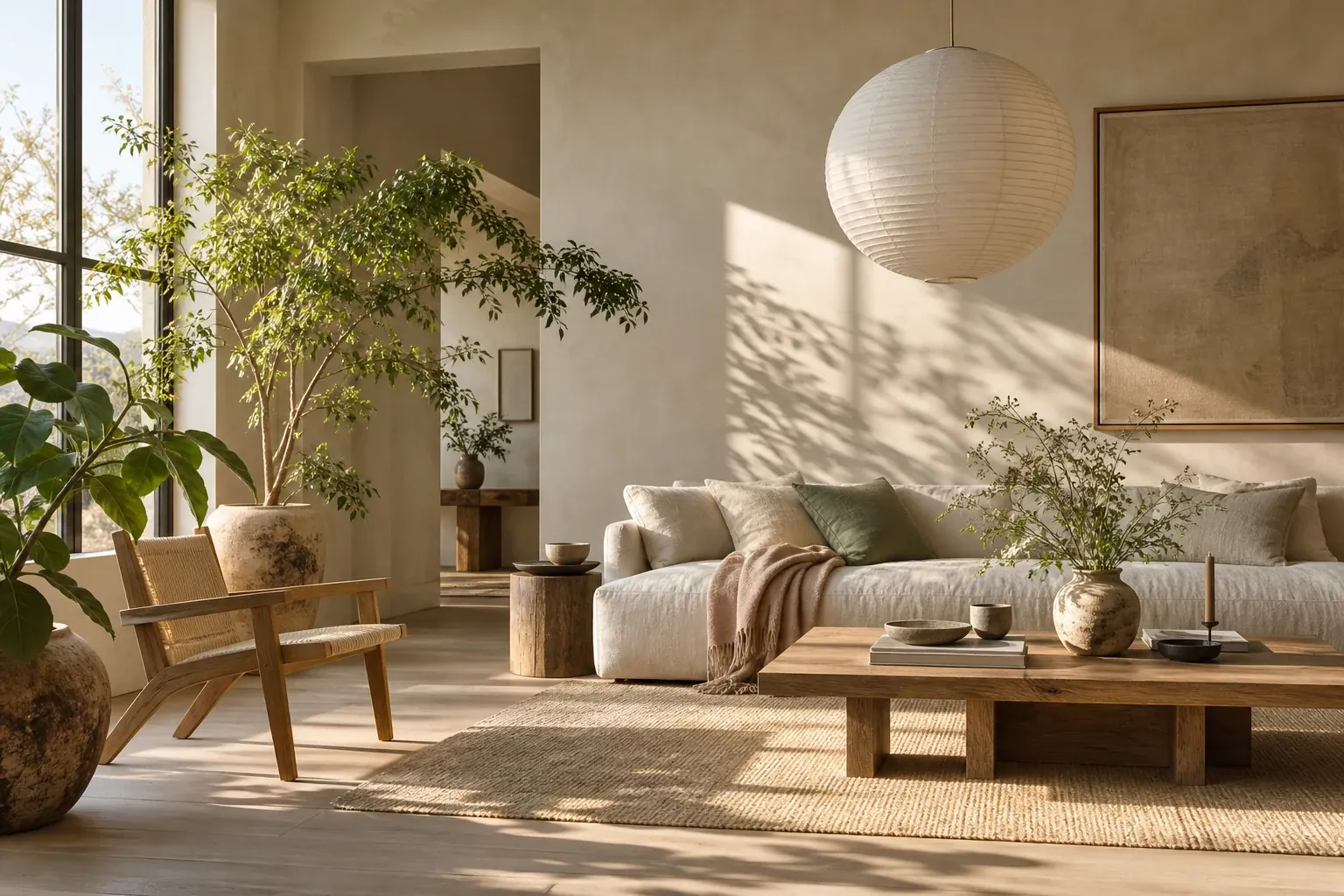
An interior reference kept beside a personal note.
More intention.
A calmer me.
Visual thinking
Using images, space and connections to explore an idea.
Thinking visually does not mean drawing beautifully. A photo, a few words and the space between them can help you compare possibilities and notice a relationship. The useful part is making your thinking easier to see and revisit.
Try it: Place two contrasting references side by side. Add one sentence about what they have in common.
Read about visual thinkingBoth leave room to breathe.
Moodboard
A collection of references that helps you explore a look, feeling or direction.
A moodboard brings selected images, textures, colors and words into one view. It is useful before you have a finished answer: the collection helps you explain a direction, notice patterns and decide what to explore next.
Keep a short note about why each piece belongs. A small, considered collection is often more useful than a large pile of images with no shared intention.
Read about moodboards
Warm materials.
Room to breathe.
The space, the practice and the collection.
They work together, but you can begin with any one of them.
An infinite canvas is the space.
It gives you room to gather and arrange material freely. The position of each piece can add meaning, and you can always return to a list when you need to.
Visual thinking is how you work with what you see.
You use images, words and connections to explore ideas, compare possibilities and notice relationships. It helps you see your thinking more clearly and revisit it later.
A moodboard is one collection you can build there.
You bring together images, textures, colors and words to explore a look, feeling or direction. It helps you explain your ideas and decide what to explore next.
A couple of useful questions.
Do I need to be able to draw?
No. Start with your own words, a photograph or a useful source. Drawing is one way to express an idea, not a requirement.
Read the getting-started guideWhere should I begin?
Choose one question and gather three things that relate to it. Arrange them, add a note and see what you want to explore next.
Explore the features