Short answer
Good photoshoot ideas pair a specific subject with a visual decision: a window-lit self-portrait, a reflection in a puddle or a still life arranged by color. Choose an idea that fits your space, light and participants, then plan a small set of required shots. These 50 prompts include practical starting cues rather than equipment shopping lists.
Portrait and self-portrait photoshoot ideas
Choose one idea and make a short series instead of trying every pose at once. Decide what the portrait should communicate, invite the participant’s suggestions and keep an easy way to pause. For self-portraits, place a stand-in object where you will sit and make a test frame before using your camera or phone’s timer.
- 01. The favorite-chair portrait: seat your subject in a familiar chair and include one meaningful object, then make a closer version without changing the pose.
- 02. One-color portrait: choose a garment and background in a related color family, keeping the face distinct from the surroundings in your test frame.
- 03. A portrait with a hobby: include a knitting project, sketchbook or instrument and ask the person to demonstrate an ordinary action rather than perform expertise for the camera.
- 04. Doorway self-portrait: use the doorway as a frame, set a timer and compare standing inside it with standing slightly in front of it.
- 05. The same place, three expressions: keep framing and light fixed while your subject tries relaxed, thoughtful and playful expressions they feel comfortable making.
- 06. Profile and negative space: photograph a side-facing portrait with open space in the direction of the gaze, then compare a tighter crop.
- 07. A portrait through leaves: place foliage near the edge of the frame without covering the face, and check that it adds context rather than accidental clutter.
- 08. A personal-object diptych: make one portrait and one photograph of an object the participant chooses, using a related background so the pair feels intentional.
These are starting situations, not instructions to copy another person’s identity or body language. Make the setting accessible and the clothing practical. Avoid an elaborate transformation when a familiar gesture tells the story more clearly. If you plan to publish the images, discuss that use before shooting, not after choosing your favorite frame.
At-home ideas using a window and simple backgrounds
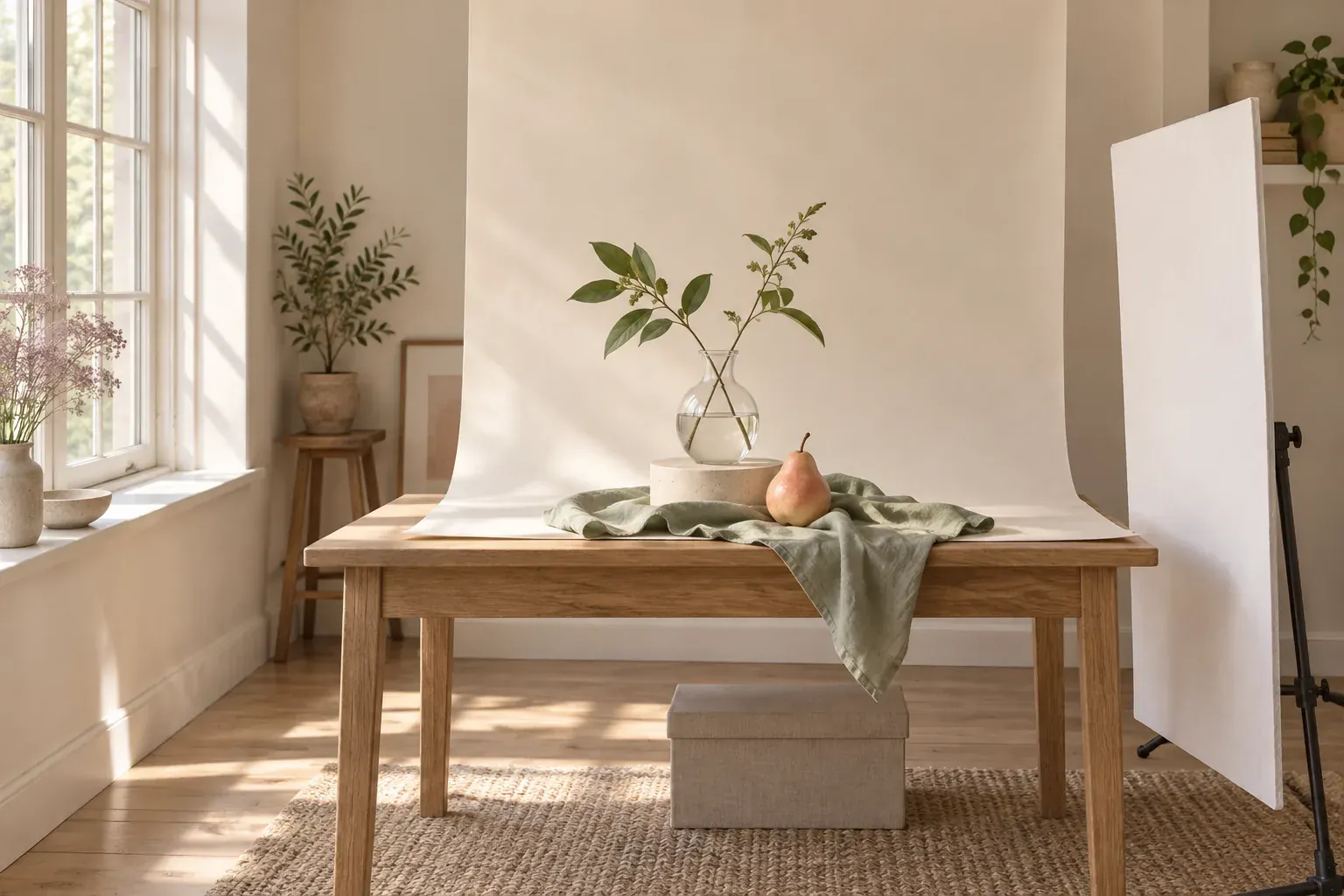
Start with the window you actually have. Make a quick photograph at the planned time and inspect the shadow direction, background and bright areas. Move the subject or choose another time if the result is not what you want. A white card can be worth testing beside the subject, but judge the actual frame rather than assuming a particular room will behave like a reference.
- 09. Breakfast for one: arrange a cup, plate and folded napkin near a window, then photograph the complete setting and one small detail before eating.
- 10. A reading corner: use a chair, an open book and a blanket, composing a wide room view and a close view without exposing private writing or addresses.
- 11. Curtain study: frame the edge of a plain curtain against the window and explore how folds look from the side and from directly in front.
- 12. Window-sill botanicals: arrange three leaves or stems in separate small vessels and compare an orderly row with a looser arrangement.
- 13. One room, one color: photograph five household details that share a color, keeping the distance and image orientation consistent across the series.
- 14. A quiet self-portrait at the table: place the camera securely, use a timer and include a genuine everyday activity such as writing a grocery list or folding cloth.
Remove distracting packaging, screens and private documents before starting. Check reflections in glass and mirrors: a tidy-looking set can still reveal something unintended. Keep equipment stable and clear of walkways. The most useful home photo shoot ideas often come from changing the viewpoint of one familiar corner, not redecorating the whole room.
Outdoor and golden-hour ideas
Golden hour refers to the period shortly after sunrise or before sunset, when photographers often seek warm, low-angle light. Adobe’s golden-hour guide explains why scouting and preparation matter as the light changes. Check the local conditions rather than treating the name as a guaranteed sixty-minute appointment.
- 15. A portrait beside a sunlit wall: choose a permitted, uncluttered wall and compare the subject facing along it with facing toward the open space.
- 16. The end-of-day walk: photograph a consenting friend walking toward and away from you on a safe path, leaving room around the figure.
- 17. A backlit plant study: place leaves between you and the low sun and adjust your viewpoint until their edges and overlapping shapes are clear.
- 18. A long-shadow composition: make the shadow part of the subject, including enough of the person or object to explain where it comes from.
- 19. A park-bench story: use an ordinary bench as the anchor and make a wide setting, a closer view and a detail without blocking others’ access.
- 20. A skyline silhouette: find a safe viewing area and compose a recognizable foreground outline against the brighter sky, checking the result instead of relying on a fixed exposure recipe.
Visit the location before the shoot if possible and plan a weather alternative. Keep away from traffic, unstable edges and restricted areas. A promising background does not justify trespassing or crowding people. Choose an accessible route and allow enough daylight for packing away and leaving safely.
Still-life and product ideas with ordinary objects
A still life gives you time to make deliberate changes. Pick one visual problem: arrangement, texture, viewpoint or a relationship between two objects. Take an initial frame, change one thing and compare. If the image will represent a product, include a clear factual view as well as the atmospheric experiment.
- 21. A three-object color story: choose a cup, fruit and folded cloth in a restrained palette and try one dominant color with two supporting colors.
- 22. One object, three viewpoints: photograph a vessel from the side, above and at a gentle angle, checking which view explains its shape best.
- 23. Material contrasts: pair rough paper with smooth glass or textured linen with polished metal and make the difference in surface visible.
- 24. A shelf in miniature: arrange a few small objects at different heights, leaving a clear gap around the item you want to emphasize.
- 25. A product and its use: show a notebook alone, then beside a pencil and an ordinary workspace, without inventing unsupported performance claims.
- 26. An ingredient sequence: photograph a whole piece of fruit, a cut piece and the peel in related compositions, making any food preparation safe and practical.
Use your own objects and photographs wherever possible. An appealing reference is a clue about light or arrangement, not a license to reproduce someone else’s full composition. For more ways to compare references, look at these mood board examples. Select a small number of images and write what you want to learn from each before building the set.
Seasonal ideas without elaborate costumes or props
Let the actual season and place provide the material. These prompts do not require a particular climate, holiday or store-bought decoration. Adapt the subject to what is available locally, and avoid collecting plants or moving natural materials where that is prohibited or disruptive.
- 27. Spring growth journal: photograph the same potted plant from the same position on several dates and keep the dates in your notes.
- 28. A summer shade picnic: arrange a small meal in a permitted shaded spot and photograph the setting before including consenting participants.
- 29. Autumn pocket still life: arrange a few legally collected fallen leaves with an everyday object to give the shapes a sense of scale.
- 30. Winter texture study: photograph knitted fabric, a warm drink and window light at home rather than depending on snow you may not have.
- 31. Rain-day reflection: photograph a puddle from a safe dry position, trying a recognizable reflection and a more abstract crop.
- 32. A seasonal doorway: document your own entrance as its light or decorations change, keeping house numbers and personal details out of a public series.
A seasonal series becomes more distinctive when you choose a repeated constraint: the same viewpoint, one object or a consistent crop. Record the choices so you can repeat them. Do not rearrange wildlife, disturb nests or ask participants to endure uncomfortable conditions for an image.
Creative techniques: reflections, shadows and motion
Treat each technique as a small experiment with an understandable subject. Make a plain reference photograph first, then try the altered version. Keep the originals when you combine images, and label a composite or staged result honestly if its presentation could otherwise imply a documentary event.
- 33. Mirror-fragment composition: use an intact small mirror on a stable surface and frame one reflected detail beside its surroundings; do not break glass for the shot.
- 34. Leaf-shadow backdrop: position a plant so its shadow falls on plain paper, then compose the shadow with a simple object rather than adding several competing props.
- 35. Moving fabric study: secure the camera and photograph a gently moving scarf with a slower shutter speed, comparing how much movement remains recognizable.
- 36. Double-exposure portrait and place: combine your own portrait with your own landscape using a supported camera mode or editor, and make the connection between the two subjects intentional.
- 37. Photograph through textured glass: place an object safely behind an existing patterned glass panel and try partial abstraction alongside a clearer view.
- 38. Deliberate camera-motion color study: use a slow exposure and a small controlled camera movement on a static colorful scene, then select frames with a readable visual structure.
For motion blur, a slower shutter records movement over a longer interval; the appropriate exposure depends on light and subject motion. Adobe’s motion-blur tutorial explains the role of shutter speed and steady support. For double exposures, Nikon’s multiple-exposure guide demonstrates combining images; check your camera’s own manual because support and controls vary.
Couples, friends and family ideas
Give participants an activity rather than demanding a pose that does not suit them. Discuss touch, proximity and image use beforehand, and let anyone decline. If children are involved, coordinate with the responsible adult and keep the session appropriate, comfortable and short enough for the participants.
- 39. Two people making tea: photograph the shared activity as a wide view and two details, checking that each person is comfortable with how they appear.
- 40. Friends swapping books: ask each person to bring a book they genuinely enjoy and use the exchange as a natural starting action.
- 41. A family cooking sequence: capture preparation, a shared moment and the finished dish without interrupting safe kitchen tasks.
- 42. A seated conversation: place two people in comfortable chairs and photograph them listening as well as speaking, with permission for the quieter moments.
- 43. The shared-path portrait: photograph a couple or friends walking side by side on a clear safe route, letting them choose their pace and distance.
- 44. A group object portrait: ask everyone to bring a small meaningful item, then photograph the group and a separate arrangement of the objects.
Avoid assuming that couples want romantic gestures or that families want matching outfits. Ask what kind of image feels representative. Include a simple frame where everyone can be seen clearly before experimenting with movement, layers or unusual crops. Leave room for breaks and ordinary conversation.
Documentary and everyday-life ideas
Choose a small, honest subject you have access to rather than staging an event and presenting it as spontaneous. Ordinary routines offer useful sequences: a beginning, a task, a detail and an ending. Ask before photographing private spaces or making people the recognizable subject of your project.
- 45. A morning routine in four frames: document your own first cup, workspace preparation, task and finished setup from distinct viewpoints.
- 46. A repair story: with permission, photograph a personal object before, during and after a repair, keeping the worker’s safety and concentration first.
- 47. Your usual route: make a series of textures, corners and landmarks along a familiar walk without exposing private addresses or identifying strangers unnecessarily.
- 48. A desk at three times: photograph your own workspace before work, midway through and after tidying, using the same position for comparison.
- 49. A local maker’s process: agree on access and intended use, then photograph the workspace, one real task and a finished object without interrupting production.
- 50. An ordinary collection: document someone’s buttons, postcards or tools with their permission, mixing an overall arrangement with meaningful details.
Keep captions accurate. Do not imply that a photograph reveals someone’s thoughts, finances or private history. If you direct an action for the camera, say so when that distinction matters. A smaller series with a clear subject is easier to finish coherently than a broad promise to document an entire community.
Turn one idea into a practical and considerate shoot plan
Choose one prompt by checking what is already available: willing participants, an accessible space, suitable light and enough time. Write a single sentence describing the series. For example, “Make four photographs of a familiar reading corner, emphasizing fabric and afternoon light” is specific enough to plan without inventing an elaborate production.
- Set the visual intention with a small photoshoot mood board: annotate subject, framing, light and background references rather than collecting unrelated attractive images.
- Translate it into a shot list: name the essential overall view, closer image, detail and any orientation the final use needs.
- Check the real gear and light: charge batteries, confirm storage, clean relevant surfaces and make a test frame in the actual location at the intended time.
- Agree on permissions and comfort: ask about location access, participants’ boundaries and intended image use; do not assume permission for one use covers another.
- Plan a fallback: name the indoor alternative, simpler setup or shorter sequence you can use if conditions change.
- Review before leaving: check the essential frames, record useful notes and keep original files separate from edited selections.
For a consistent series, use the principles in art direction to decide what stays the same: palette, distance, background or finish. In Canvas Perch, images, notes and links can sit side by side on an infinite canvas, with checklists nearby. Use the arrangement to keep the selected idea and practical checks together.
Permissions and consent need attention beyond a mood board. Confirm the location’s rules, discuss how identifiable participants will be shown, and use your own, licensed or public-domain reference material with appropriate credit. Requirements for releases, commercial use and public photography vary; this is general courtesy guidance, not legal advice or a substitute for appropriate advice about your particular shoot.
Questions and answers
What are easy photoshoot ideas at home?
Try a window-lit breakfast still life, a favorite-chair portrait, a one-color household series or a reading-corner study. Choose a small area, make a test frame and plan an overall image plus two details.
How do I come up with a photoshoot concept?
Pair a subject you can access with one visual decision, such as side light, reflections or a repeated color. Write the intended series in one sentence, choose a few annotated references and turn the concept into a shot list.
Can I do a photoshoot with a phone?
Yes. Choose a subject and composition that your phone can capture, use available light and check your test images. Timers, manual controls and special modes vary by device, so do not assume every technique is supported.
What should I bring to a simple photoshoot?
Bring the camera or phone you plan to use, charged batteries or power, available storage, your shot list and the agreed props. Add only the support, reflector or other equipment your tested setup needs.
How do I plan a photoshoot with friends?
Agree on the activity, location, time, image use and boundaries first. Choose a comfortable prompt, capture a clear group frame and leave optional experiments for afterward, with breaks and an easy way to stop.