Short answer
A canvas theme is the one idea that decides what belongs on a board. A good theme is narrow enough to guide your choices, such as “late afternoon light in small rooms”, and open enough to surprise you. Below are theme ideas in seven groups, each with a one-line prompt to get started.
Atmosphere and light
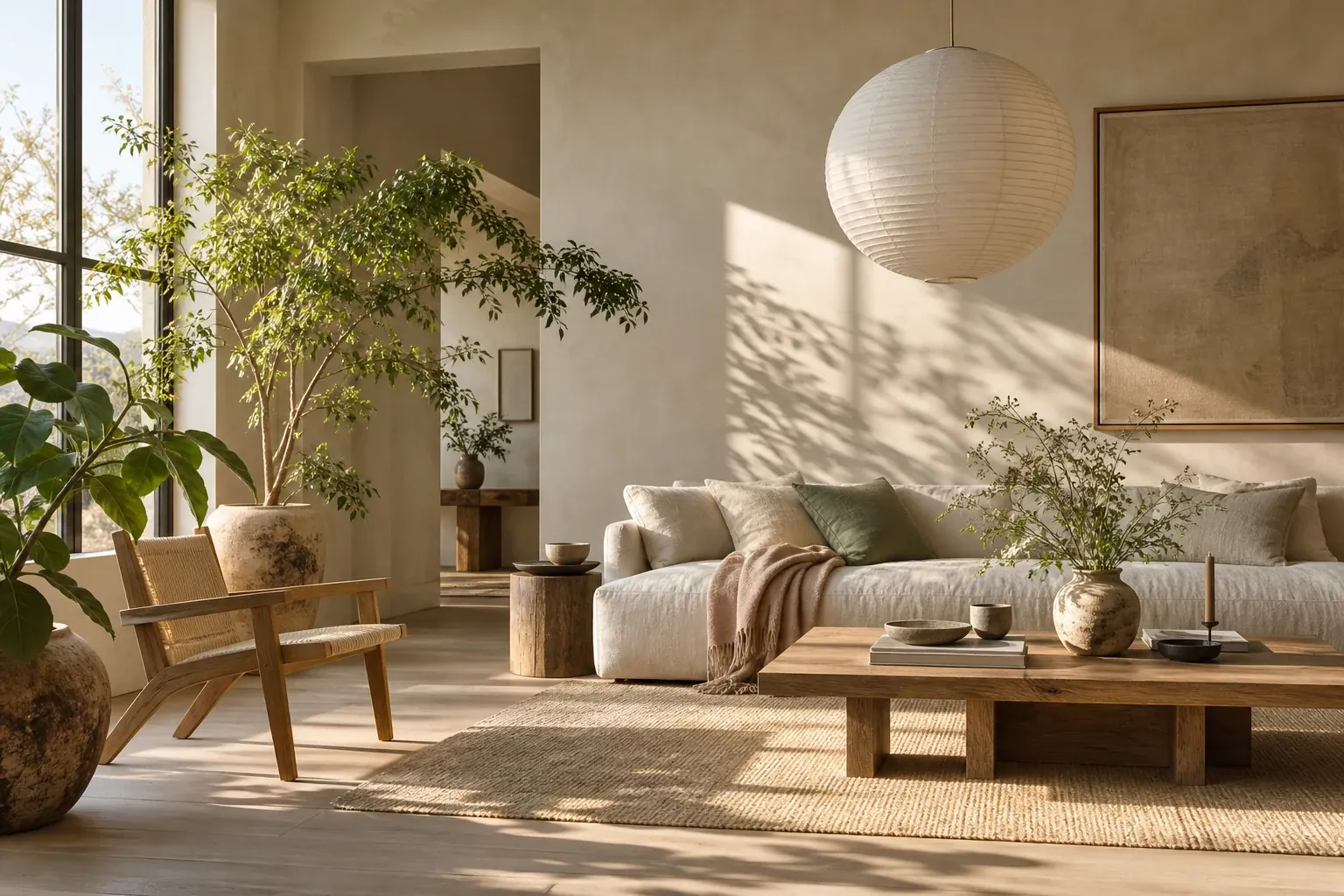
- Late afternoon light
- Collect rooms and streets where the light comes in low and warm.
- Overcast calm
- Find places that look their best on a grey day.
- Lit windows at night
- Gather windows seen from outside after dark and note what each one suggests.
- Leaf shadows
- Look for patterned shade falling on walls, floors and fabric.
Materials and texture
- Handmade surfaces
- Gather surfaces where you can see how they were made: torn paper, thrown clay, hand-cut wood.
- Worn wood
- Collect wood that shows years of hands and weather.
- Linen and undyed cloth
- Find fabrics that look better creased.
- Stone and clay
- Pair cool stone with warm fired clay and write what changes between them.
Color
- One color, many materials
- Pick a single hue and find it in ten different textures.
- Sage and terracotta
- Test how a muted green and a warm earth tone share a room.
- A palette from one photograph
- Choose one image you love and build a five-color palette from it.
- Almost white
- Collect whites and creams that are clearly different from each other.
Place and travel
- A route you walk often
- Photograph the same walk on three different days and compare them.
- First hour in a city
- Gather references for the early morning of a place you want to visit.
- Where land meets water
- Collect dunes, sea walls, rocks and grasses along an edge.
- A room from memory
- Rebuild a room you remember with references that feel close to it.
Seasons
- The first cold morning
- Find the textures and colors that tell you the season has turned.
- Late summer fruit
- Collect ripe colors, bruised skins and market tables.
- Early spring green
- Look for the pale green that comes before full leaf.
- Rainy-day interiors
- Gather rooms that feel best with rain on the windows.
Story and character
- A character’s desk
- Furnish the desk of someone in your story. What do they keep within reach?
- The house in chapter one
- Find the doors, floors and light of the place your story opens.
- A town at the edge of a map
- Collect the buildings, weather and signs of a place that does not exist yet.
- One object, three owners
- Imagine how a single object looks after each person who has kept it.
A research question
- How does a place change across a year?
- Return to one site and add a dated image on each visit.
- What makes a room feel quiet?
- Collect rooms that feel quiet and note the reason under each one.
- How do others solve the same small problem?
- Gather ten solutions to one detail, such as a door handle or a shelf bracket.
- Where does a pattern come from?
- Trace a motif back through each source you can find, and keep the links.
Turn a theme into a working canvas
- Write the theme as a full sentence at the top of the canvas.
- Start with a handful of references rather than a large batch.
- Add a short note beside each image about why it fits.
- Move related pieces together and name what they share.
- Remove anything you cannot connect back to the theme.
- Leave one next step, such as a photograph to take or a source to check.
For more on building a board around a theme, read what a mood board is or the guide on how to make a moodboard.
Templates that start from a theme
Canvas Perch includes three starter templates that each begin from a simple theme:
- Quiet spaces: a gentle moodboard for material, light and atmosphere, with an opening note and a checklist for natural light and tactile materials.
- Coastal field notes: a research canvas that starts with a field note asking what changed since the last visit.
- Kyoto notebook: a visual travel notebook with a checklist of places to revisit.
All three are on the templates page.
Questions and answers
What makes a good mood board theme?
A theme you can write as one sentence and use to decide whether a new reference belongs. If everything fits, narrow it.
Can one canvas hold more than one theme?
It can, but two directions on one board are hard to compare. Keeping one theme per canvas makes each easier to read.