Short answer
A fashion mood board brings silhouettes, fabrics, colors and styling references together to define the direction of a collection or outfit. Start with the wearer and occasion, then explain what each reference contributes rather than collecting finished looks to copy. A useful board ends in choices you can sketch, sample or try on.
Decide whether you are planning a collection or one look
A collection board needs a visual language that can produce several related garments. A single-outfit board needs a workable combination for one person and occasion. Name which job you are doing before gathering references. Otherwise, a promising theme can drift into an assortment of beautiful pieces that neither belong to one collection nor work together as an outfit.
Write the starting brief in a sentence: “A small collection of relaxed separates for warm evenings, with soft structure and a restrained color story.” For an outfit, specify the setting, weather, movement and garments already available. These are original example directions, not trends to follow. Add practical limits such as washability, sewing skill, fabric availability or a shoe you need to wear.
- Collection: define the wearer, use, season or conditions, garment categories and connecting idea.
- Single look: name the occasion, comfort needs, existing pieces and one focal element.
- Both: choose three descriptive qualities and write what they mean visually.
- Next decision: identify whether you need to settle silhouette, fabric, color or styling first.
Gather fashion references without copying a designer
Look beyond finished outfits. Architecture can suggest a rounded volume; a landscape can suggest a color relationship; a folded curtain can suggest drape. These references need translation, not literal reproduction. An arch does not automatically become a neckline. Write the feature you notice, such as “a wide curve held by a narrow support,” then explore several ways it might become a garment detail.
When studying clothing from different eras, record the date or context if you know it and keep the source. Separate what interests you about proportion from what belongs to a specific garment or designer. One runway photograph should not dictate the silhouette, color, fabric and styling at once. Develop your own sketches and sample decisions instead of tracing a finished look.
Keep permissions and credits with images you may later publish; collecting a reference does not establish permission to reuse it in marketing. For a board that will become a shoot plan, the photoshoot mood board guide separates clothing direction from light, framing and location. Those decisions can inform each other without becoming one crowded board.
Turn silhouettes into a coherent shape language
Group the references by shape rather than by outfit. Look for fitted or loose volume, long or cropped proportions, straight or curved edges, and the placement of visual weight. A narrow upper body with a wide hem tells a different story from a broad shoulder with a tapered lower half. Simple outline sketches help you see those relationships without being distracted by a model, setting or color.
For a collection, choose a recurring shape principle and vary it deliberately. For example, a curved seam might appear in a jacket and skirt without making every garment identical. Check the pieces beside one another: is there a connection, and does each have a purpose? Leave room for a quieter supporting garment if every sketch competes to be the centerpiece.
For one outfit, compare the actual pieces together. A cropped jacket changes where a dress appears to begin; a shoe changes the balance of a wide trouser. Photograph combinations you can really wear, or make quick proportion sketches when a piece is still missing. Keep fit questions visible. A reference image cannot tell you how a garment will sit or move on its intended wearer.
Build the color story around fabric behavior
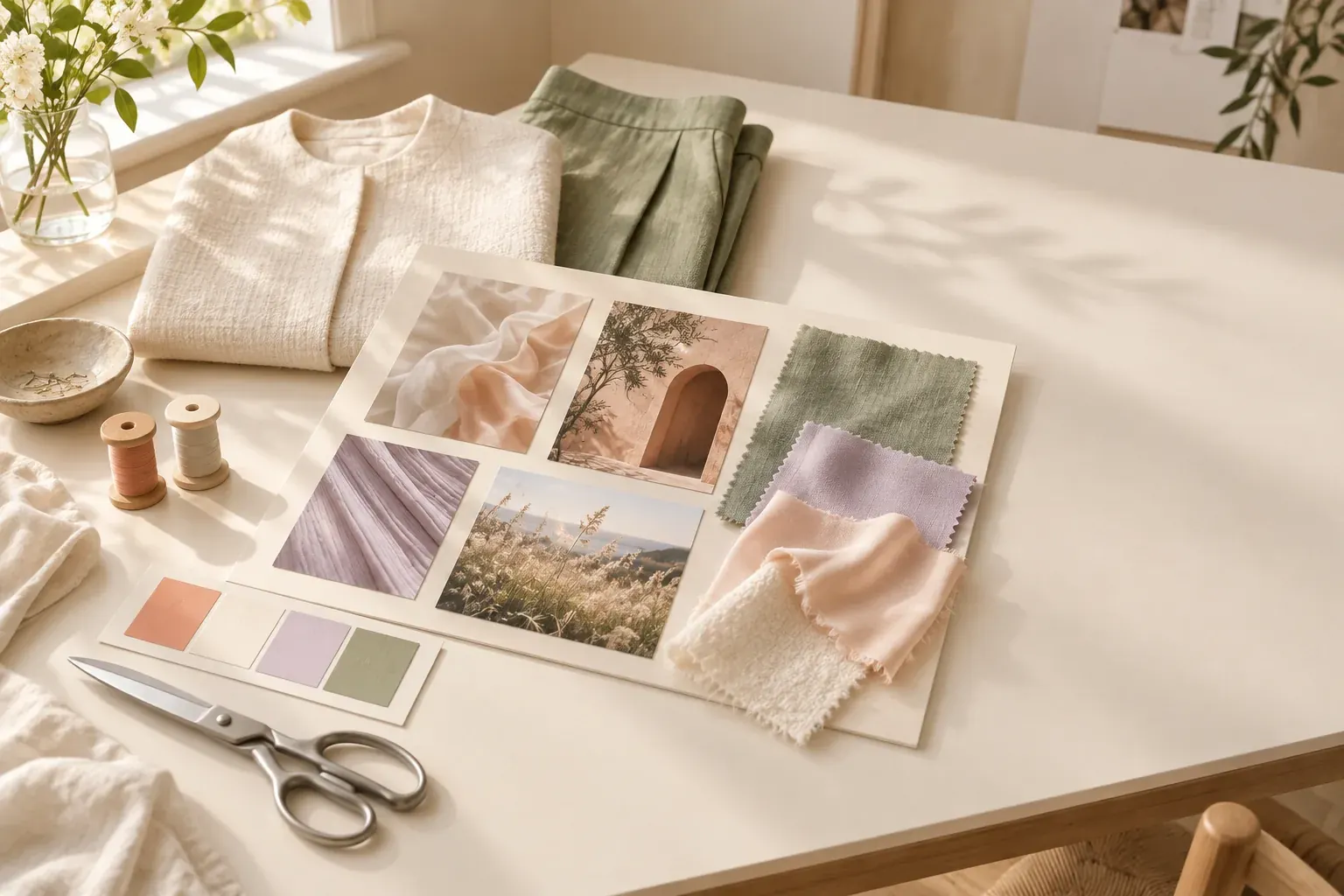
Assign colors jobs instead of giving every swatch equal importance. Decide which color carries the large surfaces, which supports it and which provides a small accent. Show combinations, not only isolated chips: an ivory jacket with a sage skirt is a different decision from equal blocks of ivory and sage. Include any existing garment whose color is already fixed.
Add real fabric swatches where possible and label their composition, weight, source and intended use. Compare drape, opacity, surface and stretch. A fluid reference in a stiff fabric will not produce the same silhouette, and a beautiful sheer sample may need an additional layer. Fold, hang and place samples against each other rather than judging them flat in a small photograph.
Check combinations in daylight and under the lighting relevant to the occasion. Make a test seam, gather or pleat when the design depends on that behavior, and leave unresolved construction questions beside the sample. If your palette begins with a photograph, the guide to a color palette from an image can help you choose colors intentionally; physical fabric remains the final comparison.
Copy this fashion mood board template
Use the following sections as a blank structure. Give the main concept and strongest reference more space than supporting details. Do not fill a category merely because it exists: if there is no surface treatment, say so instead of adding a decorative print that changes the direction. Keep the template short enough that you can explain it without reading every note aloud.
- Project brief: [collection or outfit], [wearer], [occasion or use], [conditions], [practical limits].
- Concept: [one sentence], [three qualities], [what this direction is not].
- Reference vocabulary: [anchor image], [non-fashion references], [source notes], [feature to translate].
- Silhouette: [outline sketches], [volume], [length], [repeated shape principle], [fit questions].
- Color story: [main color], [supporting colors], [accent], [example combinations].
- Fabric and details: [labeled swatches], [drape or stretch], [fastenings], [construction tests needed].
- Styling: [layers], [shoes], [accessories], [what remains intentionally simple].
- Edit and next step: [selected choices], [rejected alternatives], [sketch, sample or try-on to complete].
For a collection, repeat the silhouette and fabric fields for each planned garment after the overall direction is clear. For one look, replace that extra detail with photographs of outfit combinations and notes about comfort. Keep a separate sourcing or making list; the mood board is the direction, not an inventory of everything you might buy.
Add styling, then choose a useful board format
Styling can support or contradict the clothing. Decide whether layers, accessories and shoes repeat the main idea or provide a controlled contrast. An ornate accessory may make a restrained outfit feel intentional, but several competing focal points can obscure the silhouette you worked to establish. Show one complete combination and note which elements are essential versus optional.
A physical board is useful when touch, thickness and fabric relationships matter. A digital layout is useful for comparing images and keeping source notes beside them. A sketchbook can combine photographs, swatches and early drawings. Choose the format that helps you make the next decision, and keep a small physical sample set even when the main board is digital.
Look for a tool that lets you arrange images legibly and retain notes rather than treating an attractive preset as the main requirement. The guide to making a mood board covers the general collecting and editing rhythm. Here, the extra test is whether the arrangement explains an actual garment or outfit choice.
Edit the board into a collection, outfit or brand direction
Review each image against the brief. Can you name its contribution? Does another reference already do that job? Remove duplicates and separate unresolved alternatives. Keep a visible distinction between inspiration, a possible material and a chosen design. If the board looks cohesive only because every photograph uses the same filter, compare the underlying shapes and fabrics again.
Then test the direction outside the collage. Sketch a small set of garments, make a fabric trial or try the outfit on and move in it. Identify the decision that changed and update the board. A strong board is allowed to evolve when physical evidence disagrees with the original reference; preserving an attractive layout is less important than making something that works.
For a fashion brand, connect the collection’s direction to broader choices about photography, presentation and tone, but keep those choices distinct from garment construction. A brand mood board can hold that broader language. Finish your fashion board with a concrete next action, such as testing a sleeve volume or comparing two swatches, rather than another round of collecting.
Questions and answers
How do you make a mood board for fashion?
Define the wearer and project, collect references for specific qualities, then organize silhouette, color, fabric and styling. Edit to one direction and test it with sketches, samples or a try-on.
What should you put on a fashion mood board?
Include a short brief, shape references, a color story, fabric swatches and styling ideas. Add source notes and practical questions so the references lead to decisions rather than imitation.
What is the best fashion mood board app?
Choose according to the work: easy image arrangement and notes for digital research, or a format that can accommodate real swatches for material comparison. Check sharing and export needs before choosing; there is no single best format for every project.
What do designers use for fashion mood boards?
Possible tools include physical sample boards, sketchbooks, slide layouts and digital canvases. The important distinction is whether the board is exploring a direction, comparing materials or presenting a decision.
What makes a good mood board for a fashion brand?
It connects a clear wearer and brand intention to a consistent shape, material and color language. It should show what stays recognizable across different garments without forcing every piece to look identical.
What’s one thing that shouldn’t appear on a fashion mood board?
A finished designer look presented as your own proposed design. Identify the specific quality you are studying, keep the source and develop an original response through sketches and material tests.